
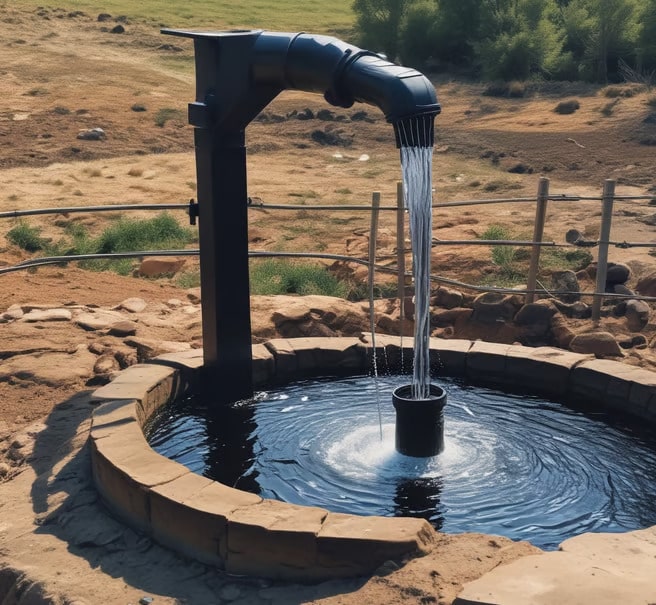
In the arid landscape of West Texas, water isn’t just a utility—it is our most precious finite resource. For those who rely on private or commercial wells, the concept of water sustainability isn’t just an environmental buzzword; it’s a matter of long-term survival for farms, ranches, and businesses.
To manage a well effectively, you must understand where your water comes from and, more importantly, how (and if) it is being replenished.
What is Aquifer Recharge?
An aquifer is not an underground lake; it is a massive formation of porous rock, gravel, or sand that holds water like a giant sponge. Recharge is the process by which water from the surface—usually from rainfall or snowmelt—percolates down through the soil and rock layers to refill that “sponge.”
The West Texas Challenge
In our region, natural recharge is a slow and difficult process. Several factors make sustainability a unique challenge here:
-
Low Precipitation: With limited annual rainfall, there simply isn’t much water available to begin the journey downward.
-
The “Caliche” Barrier: Much of the Permian Basin is covered by a layer of caliche—a hardened, natural cement-like soil that is nearly impermeable, preventing water from soaking into the ground.
-
Evaporation Rates: Our steady winds and high temperatures often evaporate surface water before it has a chance to infiltrate the soil.
The Major Aquifers of Our Region
Understanding your specific water source is the first step toward water sustainability.
| Aquifer | Primary Use | Recharge Rate | Sustainability Outlook |
| Ogallala | Agriculture & Municipal | Extremely Slow (approx. 0.5″ per year) | Declining; considered “fossil water” in many areas. |
| Dockum | Industrial & Livestock | Very Slow | High salinity; used as a secondary source as Ogallala levels drop. |
| Edwards-Trinity | Domestic & Irrigation | Moderate (4-7% of rainfall) | Generally stable but highly dependent on seasonal rain. |
How Well Owners Can Practice Water Sustainability
While we cannot control the rain, we can control how we manage the water we have. Aquatech Solutions recommends the following strategies for proactive stewardship:
1. Precision Pumping
Avoid “over-pumping” your well. Drawing water out faster than the local formation can yield it creates a “cone of depression,” which can lower the water table for you and your neighbors. Using Variable Frequency Drives (VFDs) can help maintain steady pressure without taxing the aquifer.
2. Protect Natural Recharge Zones
If you have “playa lakes” or natural depressions on your property, keep them clear of debris and pollutants. In West Texas, these are often the only points where water can bypass the caliche layer and reach the aquifer.
3. Regular “Static Level” Monitoring
Knowing the depth of your water table during different seasons helps you identify trends. If your water level is dropping year-over-year, it’s a signal to adjust your usage patterns before the well runs dry.
4. Advanced Filtration and Reuse
For industrial and commercial users, water sustainability often involves recycling. Treating and reusing graywater for dust suppression or cooling can significantly reduce the demand on your fresh water well.
Partnering for the Future of Texas Water
Sustainability is a collective effort. At Aquatech Solutions, we specialize in helping West Texans maximize their water resources through high-efficiency pump systems, water quality testing, and expert well design.
We don’t just drill for today; we engineer for tomorrow. By understanding the science of aquifer recharge and implementing smart management practices, we can ensure that the Permian Basin remains a productive place to live and work for generations to come.
Want to check the health of your well? Contact Aquatech Solutions today or call us at 432-214-4520 to schedule a water level assessment and sustainability consultation.